A Millenary Sanctuary
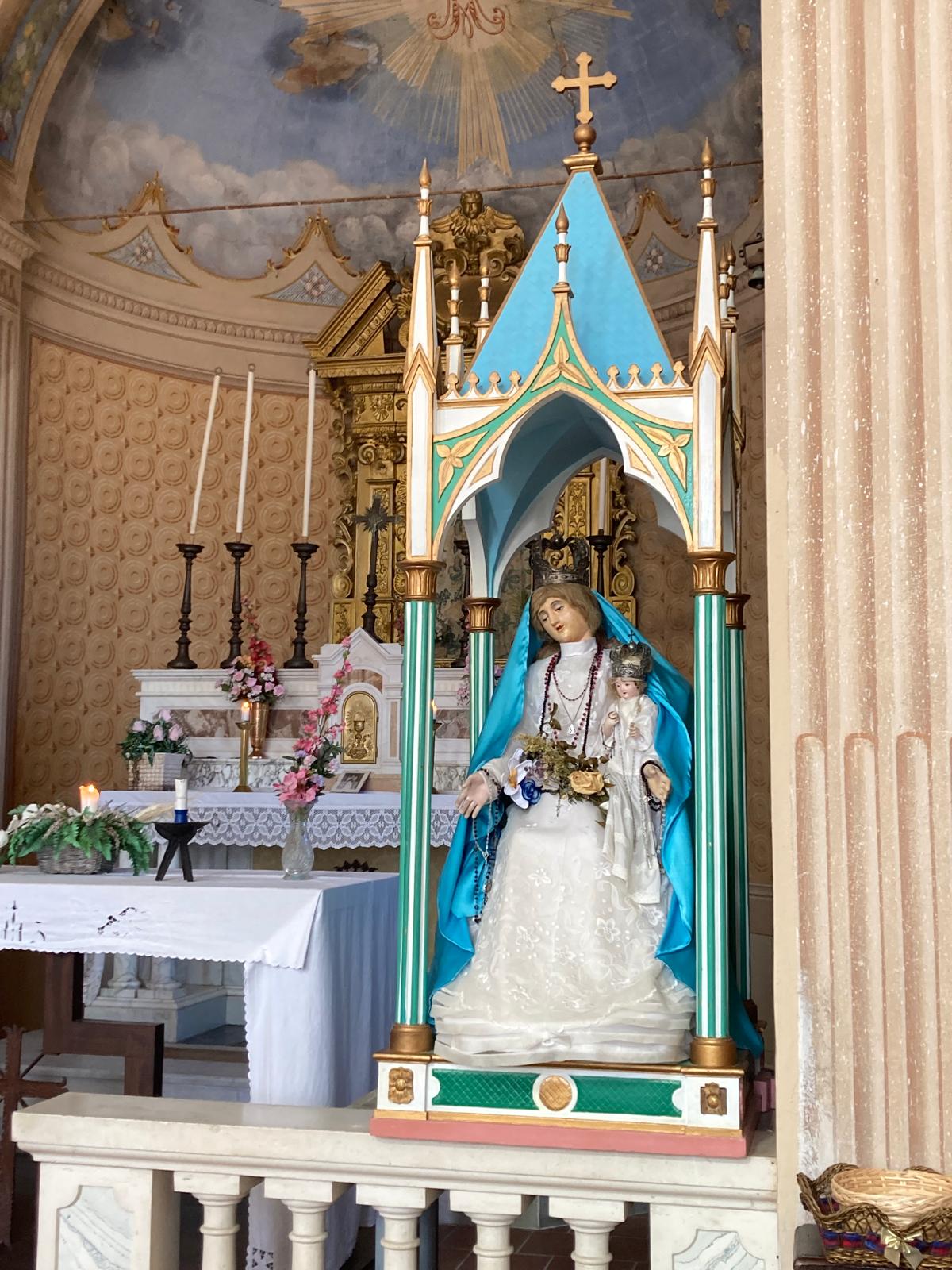
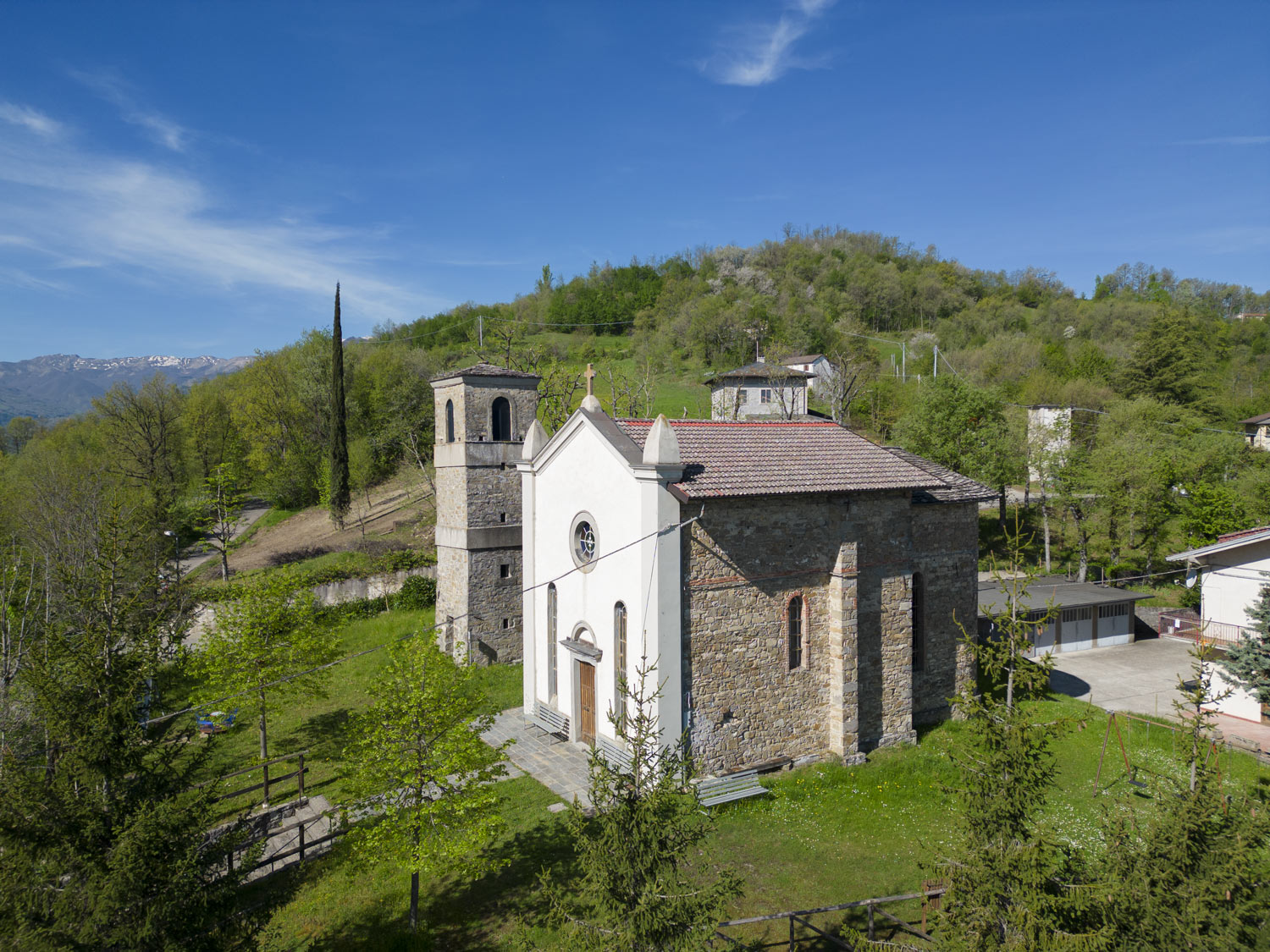
In the heart of Rocchetta Sandri, by climbing an ancient sandstone staircase, you arrive at a small but beautiful plateau where the oratory of the "Crocetta" stands, dedicated to the Nativity of Mary (8 September), also known as the "Oratory of the Madonna delle Grazie".
The current oratory was rebuilt and expanded in 1935, while the original building — as the inscription on the sacristy door's lintel records — was constructed in 1631 and restored in 1721.
The original oratory stood next to the present bell tower, which, according to several historical accounts, dates from the same period. The sanctuary was more modest in size and featured three rooms, very likely intended as lodging for a hermit, who devoted his life to prayer and to the custody of the oratory.
The Inscription on the Central Door
An inscription above the central door recalls the various historical events of this Oratory:
D.O.M.
Santuario dedicato
Alla gloriosa natività di
Maria Vergine
Eretto per devozione
Dalla comunità
Nell'anno 1621
Ridotto a pericolo di cadere
Pel terremoto 1920 e per altre vicende:
Fu riedificato su nuovo progetto
Nell'anno 1935
Ricorrendo il XIX° centenario della Divina
Redenzione
Benedetto con rito solenne assieme all'altare
Fu inaugurato con grandiosa festa
L'8 settembre 1936
Parroco Landi don Rutilio
Decoratore Passini Gioachino
The Cholera Epidemic of 1855
In 1855, a terrible epidemic swept across Italy, reaching as far as Rocchetta. It was the "Asiatic Cholera", commonly called "Cholera". According to the parish death registers, the plague began on 8 September 1855, with the death of Ciocci Domenica (aged 71), and continued throughout September, ending with the last cholera death on 9 October of the same year.
The victims of this tragedy numbered 26 people in total. As each individual death record specifies, even those dying of cholera were cared for by the parish priest (Don Domenico Benassi), and all received the sacraments of confession, communion, and the anointing of the sick.
"Their bodies, in order to prevent the spread of the epidemic, were not brought into the church for the 'Usual Funeral Rites' and were not buried in the parish cemetery, but at the very earliest hours of the morning, accompanied by the parish priest and closest relatives, were blessed and laid to rest in secluded places, far from the inhabited village."
The Vow to the Madonna and the Miracle
In this situation of immense tragedy and overwhelming sorrow, the people of Rocchetta, together with their parish priest, turned with trust to the Madonna delle Grazie, with religious services, prayers, confessions, communions, and eucharistic celebrations, asking her to put an end to this terrible scourge.
The community then made a solemn "Vow" to the Virgin: if she obtained from the Lord the grace of being freed from "Cholera", the entire parish would pledge itself with a solemn promise for all future years to remember and give thanks, with immense joy and gratitude, for this special grace — precisely during the last week of September each year, with prayers, sacraments, Holy Mass, and a procession.
In response to this solemn vow, "the Cholera ceased immediately" (as reported by Don Rutilio Landi). Thus the community received what they believed to be a divine grace, a miraculous intervention of the Madonna.
The constitution of the Perpetual Capital in 1856
The following year (1856), on 7 August, before the notary Doctor Cesare Cassai, the inhabitants of Rocchetta established a capital of Modenese £ 1000, raised from offerings by all the parishioners. The annual proceeds (6%) were to be used for the upkeep of the oratory and for the religious celebrations during the last week of September.
The sum of £ 1000 was deposited with the curia of Nonantola, divided as follows: £ 300 for the Triduum of the Vow and £ 700 for the maintenance of the oratory, repairs, furnishings, and wax, invested in bonds ("Piacentine Railway Companies") which unfortunately went bankrupt shortly after and were lost.
Foundation in 1631
The original oratory is built dedicated to the Nativity of Mary, with restorations in 1721 and complete rebuilding in 1935.
The Vow of the community (1855)
During the cholera epidemic, the community vows to celebrate the Madonna every year if granted the grace of salvation.
Perpetual capital (1856)
A fund of £ 1000 is established for the upkeep of the oratory and the annual celebrations of the vow.
Annual celebration on the last Sunday of September
Every year, on the last Sunday of September, the community celebrates the Madonna del Voto with Mass, procession, and prayers.
The "Madonna del Voto" Through the Centuries
Since then, to the title of the "Madonna delle Grazie" was officially added "Madonna del Voto" (Madonna of the Vow), and so the last Sunday of September is called "The Feast of the Madonna del Voto".
This celebration represents a deep bond between the community and devotion to the Virgin: a perpetual remembrance of the suffering endured in 1855, of the faith that united the people of Rocchetta, and of a promise kept for over 170 years.
The oratory remains a sacred place of worship and devotion, visited by the inhabitants during the annual celebrations. The climb up the ancient sandstone staircase is still today a spiritual journey leading to the little sanctuary — just as it was for the people of Rocchetta who climbed it with hearts full of hope and faith in 1855.
The Madonna del Voto Today