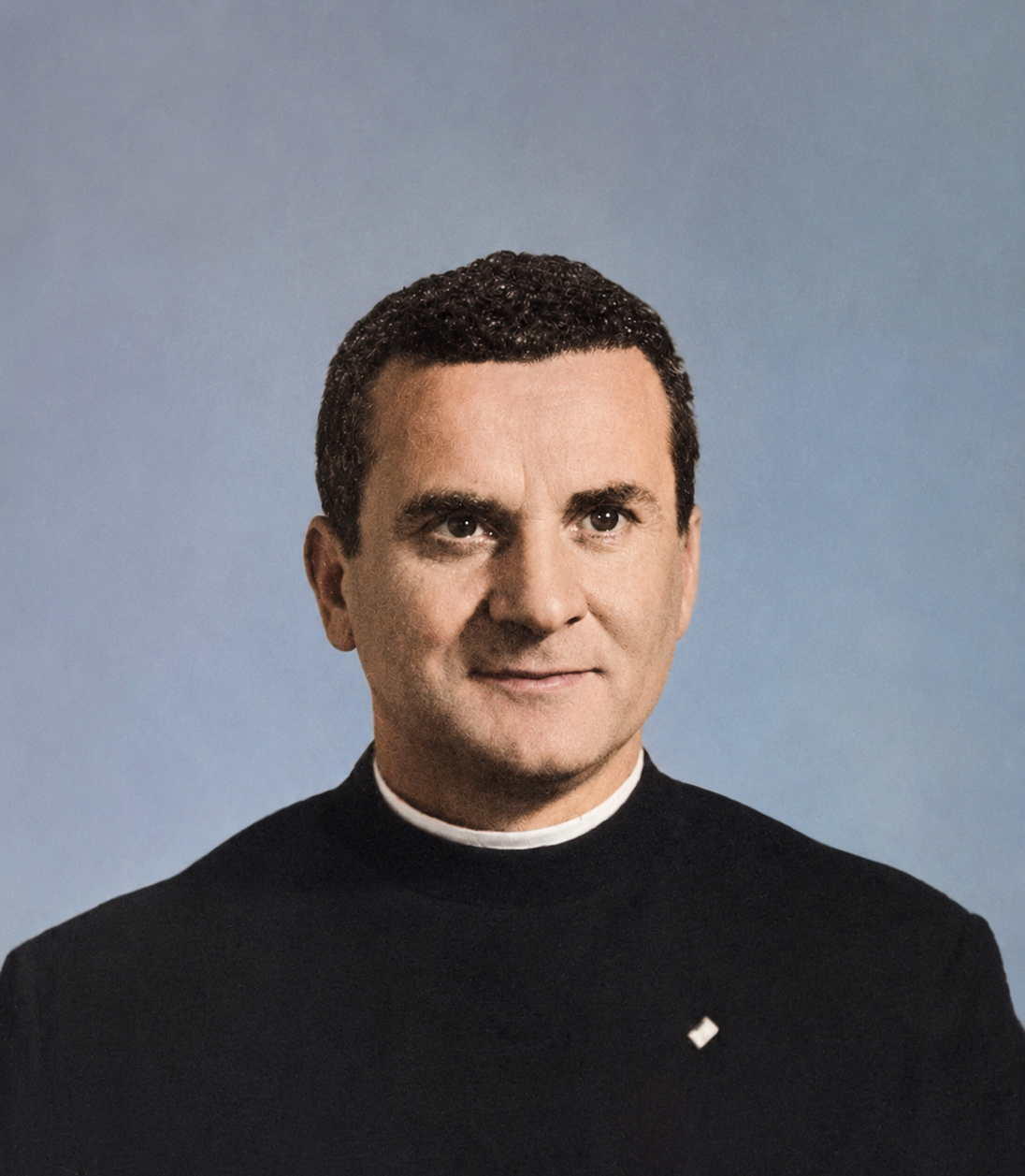
The Legacy of Don Nino
Don Nino Bozzoli Malerba (1920 – 1976)
Parish priest, educator and driving force for Rocchetta Sandri
Early years and spiritual formation
Don Nino Bozzoli Malerba was a priest, educator and reference figure for the community, whose pastoral mission was characterised by a deep commitment to the human, social and cultural development of the population, with particular attention to mountain areas lacking essential services.
Born in San Felice sul Panaro on 19 August 1920, he developed a priestly vocation strongly oriented towards social and pedagogical commitment. He was a Little Apostle of Don Zeno (founder of the Nomadelfia experience) and served as a chaplain for several years in both Modena and Grosseto. During this period he consolidated a vision of the Church as a guide not only spiritual, but also promoting civil redemption and the dignity of the "whole man".
The ministry in Rocchetta Sandri (1957 – 1972): innovation and social promotion
In 1957 he was appointed parish priest of Rocchetta Sandri, a small and isolated mountain hamlet inhabited mainly by farming families. Convinced of the mediating usefulness of culture to overcome social inequalities, Don Nino worked with intuition and tenacity to offer the community cutting-edge educational and training tools.
Childhood education and gathering
For the youngest he promoted an educational model oriented towards community growth. Among his initiatives are remembered the Sunday screenings of black and white cinema in the parish rooms reserved for children present at morning Mass, the creation of a playground behind the rectory equipped with 3 swings and various other things; after Mass he distributed to the children a biscuit and a piece of chocolate on which was written "Pontificia Opera Assistenza". But above all, the founding of the municipal nursery school, an almost unique experience in the entire mountain territory. Initially housed in the parish, the school found the following year a home in a new dedicated building (today home of the local club).
The integration of Telescuola and compulsory education
In Italy compulsory schooling was extended to the third year of middle school only from 1963. Don Nino promptly joined the Telescuola project, the experimental RAI programme born in November 1958 in collaboration with the Ministry of Public Education, based on both over-the-air broadcasts and in-person teaching staff.
In an era when television was a luxury good inaccessible to most and state middle schools were often unreachable for mountain boys, Telescuola allowed students to follow courses replacing vocational training and middle school directly over the air. Don Nino transformed the rectory and parish rooms into a real Teleconfronto Listening Post (PAT), making available the only television set in the village. Lessons lasted four hours in the morning and students were assisted by qualified teachers. The PAT of Rocchetta gained a certain notoriety such that Battista Parenti, one of the students attending middle school, was invited to Rome at RAI to the morning lessons that were broadcast from their studios and appeared on the broadcasts.
The four morning hours were dedicated to lessons on various subjects and a teaching assistant was present. Thanks to this insight, numerous young people from Rocchetta and the nearby hamlets of Vesale and Trentino obtained their middle school diploma and compulsory education, redeeming themselves from cultural and economic isolation.
Opening up to the world
Don Nino saw cinema as an effective tool for the cultural development of young people. In addition to cinema for children he proposed two other appointments. Friday for married couples, Saturday for young people and engaged couples.
Community life and spiritual roots
Social and cultural commitment was always accompanied by a profound renewal of the life of faith. Don Nino relaunched devotion to the Madonna del Voto, promoting the restoration of the related oratory and enhancing the tradition of the Holy Rosary recited on May evenings, which became a fundamental moment of encounter for the entire hamlet.
Don Nino was not however a simple personality and for that period sometimes disruptive. He dressed in civilian clothes well before the Second Vatican Council authorised it. A great smoker of "trinciato semplice" cigarettes that he made himself. Very direct, little inclined to traditions he did not share, he was a groundbreaking priest not always appreciated in a small and closed mountain village. His decision to remove the precious marble balustrade that separated the altar from the faithful caused a great sensation, thus interpreting the indications of openness given by the Council. On the other hand, the change he impressed on the village was such that it could only have a strong actor.
The last years and the legacy of memory
In 1973 he left the community of Rocchetta Sandri to take the lead of the parish of San Matteo (MO). Here he continued his ministry by integrating "Divine Pedagogy" with human sciences and renewed catechesis, until his death on 8 June 1976 at the age of 55.
As testimony of the community's gratitude and the profound mark left in the social fabric of the village, a street has been named after him in Rocchetta Sandri, located right next to the oratory that he himself had contributed to renovate and revive.
Don Nino Bozzoli Malerba
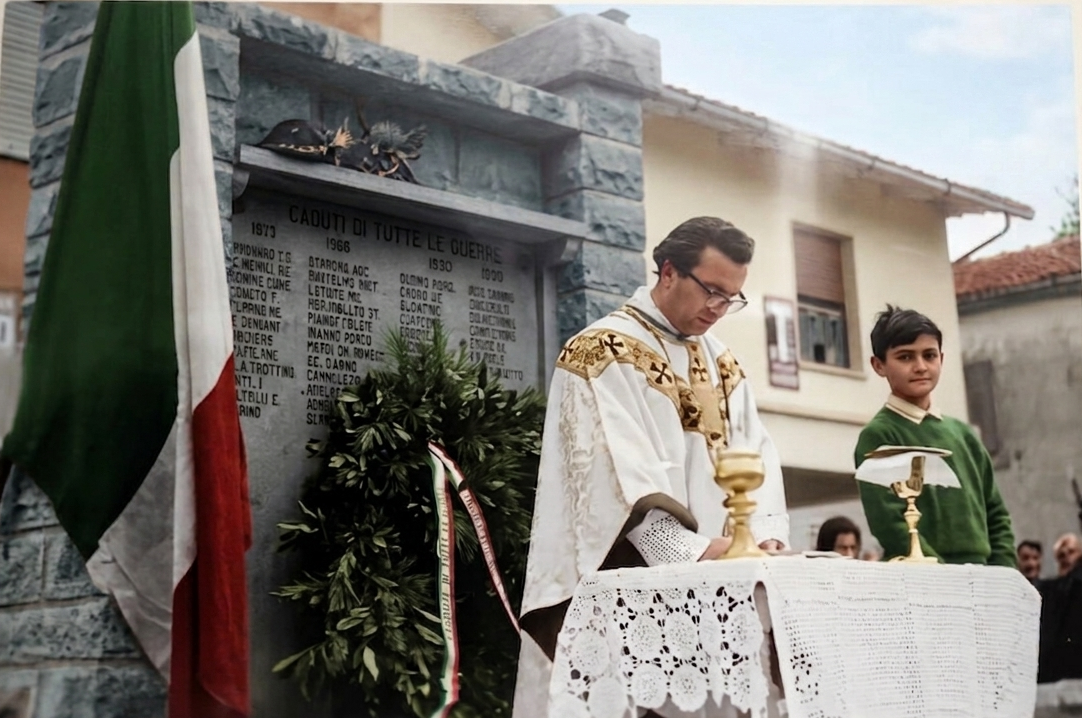
Inauguration of the war memorial
The life of Don Nino
Birth
He is born in San Felice sul Panaro (MO). He develops a priestly vocation oriented towards social and pedagogical commitment.
Little Apostle of Don Zeno
He is formed in the experience of Nomadelfia. He serves as a chaplain in Modena and Grosseto.
Parish priest in Rocchetta Sandri
He is appointed parish priest of the small mountain hamlet. He begins his commitment to education, training and community development.
Telescuola, Nursery School and Cinema
He founds the municipal nursery school, transforms the rectory into a Teleconfronto Listening Post for the middle school diploma and opens the cinema as a tool for cultural growth for young people and adults.
Leaves Rocchetta Sandri
After 15 years of ministry, he moves to the parish of San Matteo (MO).
Death
He passes away at the age of 55. The community of Rocchetta Sandri remembers him as an enlightened teacher and devoted pastor.