The Name and Origin of Rocchetta
The name "Rocchetta" probably derives from the ancient presence of a military fortress (rocca), later destroyed, of which only a small fortress remained — the so-called "rocchetta" (little fortress). It is not a simple diminutive, but the toponymic memory of a partial reconstruction, of a rebirth after destruction.
In ancient times, the Fortress of Rocchetta Sandri was called di Scoplano (or of Sclopano). It is a name that echoes the geography of the valley, at the borders of the territory it controlled. And for the first time, it is mentioned in the Diploma of Astolfo of 753 AD — the same document by which the Lombard king donated the Castrum Sextulae (Sestola) and the adjoining territories to the Abbey of Nonantola.
"The fortress is not simply a military structure lost in time: it is the foundation of the village's memory — its very name."
A Strategic Lombard Garrison
When in 568 AD the Lombards descended into Italy, after a long series of battles fought also near the river Scoltenna, two fundamental fortresses remained as guardians of the road leading down to Tuscany: the Castrum Sextulae (Sestola) and the Castrum Scoplano (Rocchetta). Both resisted until 728, maintaining control of the area for more than 150 years.
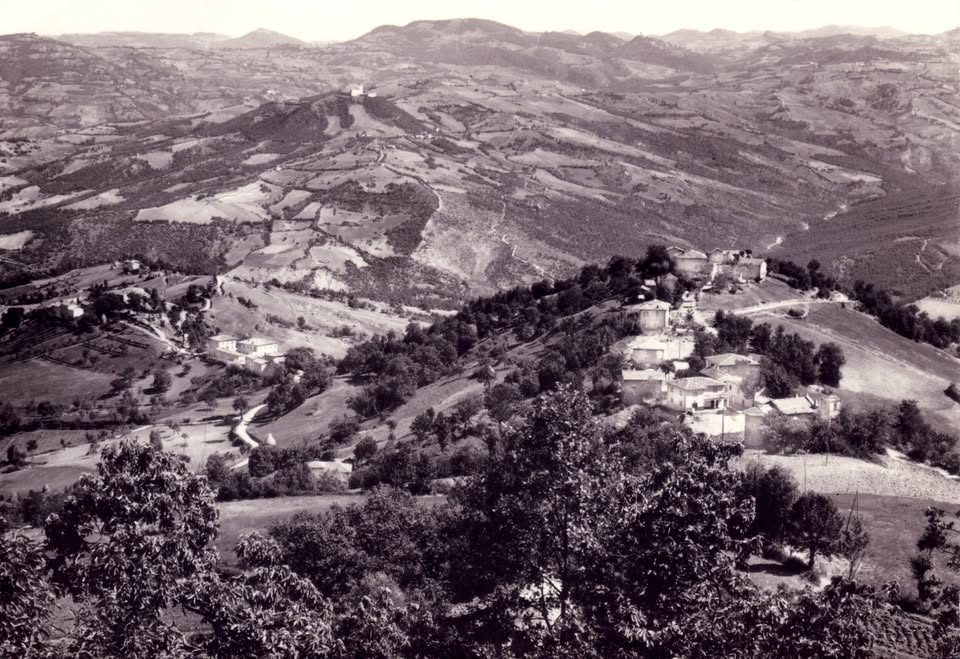
The latter, the Castrum Scoplano, enjoyed an excellent strategic position. Thanks to its placement on a panoramic plateau, it allowed visual command of the wide valley stretching at its feet, towards the Scoltenna river and the plain. A total visual dominion: whoever moved in the valley below was under the eyes of the garrison.
The Loss of Autonomy in 1406
For centuries, Rocchetta Sandri maintained its autonomy as an independent municipality. Everything changed with the wars that characterised medieval Emilia. The village suffered the consequences of the war between Obizzo di Montegarullo and the Estensi.
In 1406, the Estensi annexed Rocchetta Sandri to the province of the Frignano, stripping it of the long history of autonomous municipality it had enjoyed until then. It was in this same period that the village took the surname Sandri — from the most important and influential local family — to distinguish it from other places simply called "Rocchetta".
The Destruction of 1535 and the "Rocchetta"
Very few direct records about the fortress itself have survived. However, one episode is so important that it has remained in local memory: the events of 1535.
That year, the ducal commissioner Zanelli ordered a brutal reprisal. Several inhabitants of Rocchetta had taken part in the Sack of Sestola carried out by the Tanari — a military action that had upset the political balance of the area. The punishment was exemplary: Zanelli had the fortress razed to the ground, along with some houses and the church as well.
But this time, the fortress did not vanish completely. It was partially rebuilt, giving rise to the nickname "Rocchetta" that survives to this day. It is no longer the great and important fortress of the Lombards: it is the small fortress, the residual fortress, a remembrance of a past grandeur and a present resilience.
A strategic military garrison
It visually controlled the entire Scoltenna valley, a crucial point for transit towards Tuscany during the Lombard era.
First documented mention: 753 AD
The Diploma of Astolfo names the Castrum Scoplano as a possession of the Abbey of Nonantola — the oldest testimony of the site's name.
Loss of autonomy in 1406
The annexation to the Estensi marks the end of its long history as an independent municipality and the adoption of the surname "Sandri".
The Rocchetta: rebirth from 1535
The partial reconstruction after Zanelli's destruction transforms the name from a memory of grandeur into a symbol of resilience.
Contemporary Legacy: Invisible Traces
No visible traces of the ancient structure remain today. This is not only due to the passage of centuries, but also to the very structure of the village. There is no single consolidated historic centre, as in many other Apennine towns. Rocchetta Sandri develops instead into several scattered groups of farmhouses on the plateau, without a compact urban core.
And yet the fortress remains present: in the very name of the place, in the memory handed down through generations, in the awareness that the ground on which the village stands was once watched over by walls and garrisons. It is an intangible heritage, but deeply rooted in the identity of Rocchetta Sandri.
← Back to What to Discover