The Misunderstanding That Unites the Apennines
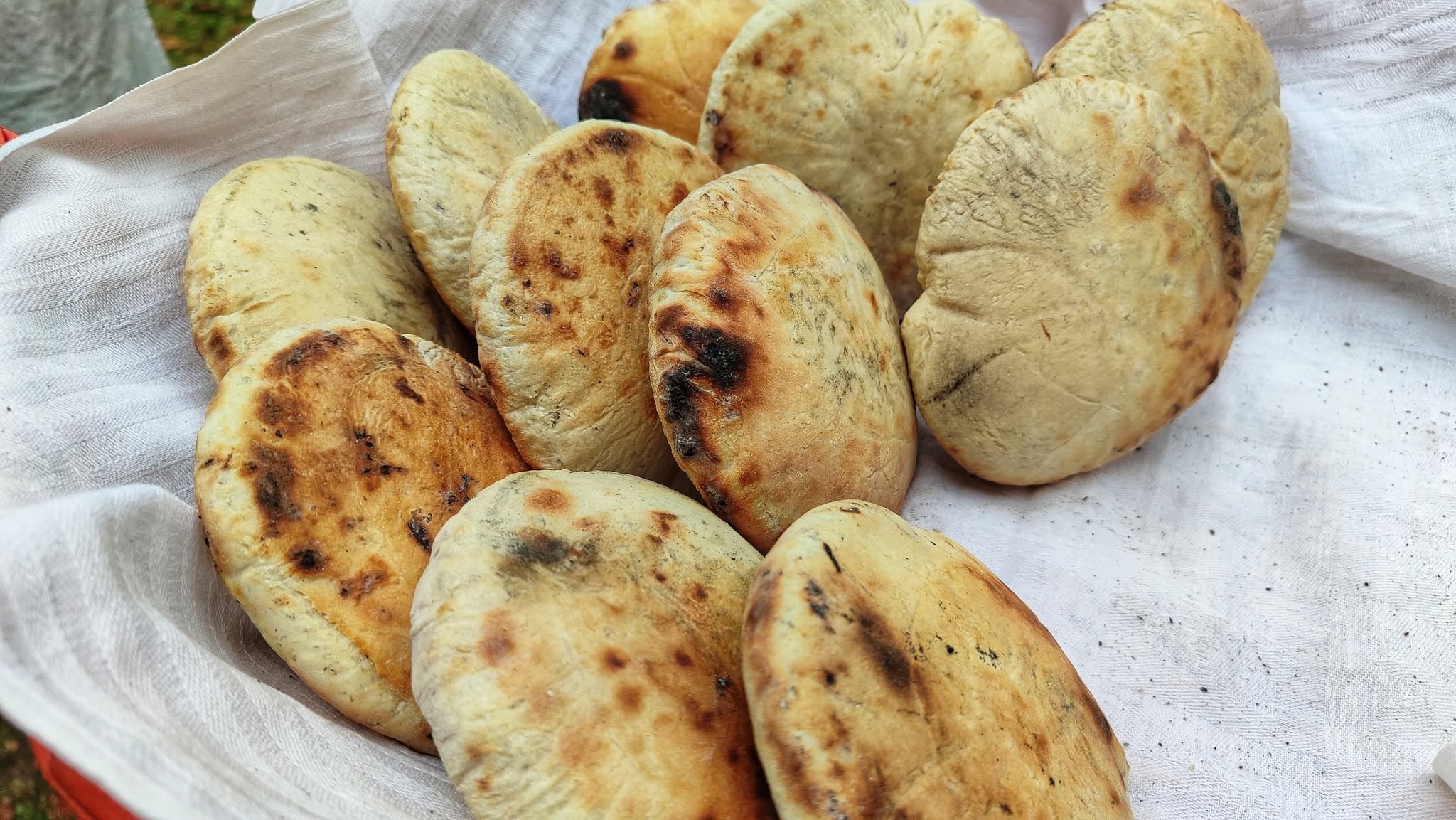
What you eat is called crescentina (or crescenta). The tigella is solely the terracotta or stone stamp used to cook it. An apparently slight linguistic slip that hides a real question of cultural and gastronomic identity.
Calling the food "tigella" is the gastronomic equivalent of confusing a baking tin with the cake itself, or a coffee pot with the coffee. And yet this mistake is so widespread outside the Modenese Apennines that it has given rise to an authentic cultural battle, embodied by the celebrated movement Don't call me Tigella.
"It's not a tigella. It's a crescentina. The tigella is the stamp. To recognise this difference means to respect the genuine tradition of the Modenese Apennines."
The Real Difference, in the Emilian Tradition
🪵 The Tigella
It is the disk or stamp traditionally made of refractory clay, quarried in the woods of the Apennines. It is often decorated with the ancient symbol of the "Flower of Life", used to mark the dough during cooking. It is the tool, not the food.
🥖 The Crescentina
It is the true round bread obtained from a dough of flour, water and salt. It is cooked under pressure by being inserted between two red-hot tigelle. It is the finished product, the result of tradition, the food that arrives on the table.
The "Don't call me Tigella" Movement
The celebrated food-and-wine movement Don't call me Tigella has for years been fighting to clarify this very common linguistic mistake outside the Modenese Apennines. It is not a pedantic battle, but a defence of local culinary memory, of historical precision, and of respect for those who have handed down this knowledge from generation to generation.
The campaign targets the confusion that sees the word "tigella" used indiscriminately to mean both the stamp and the bread. A confusion that diminishes recognition of the origins and of the genuine preparation technique.
The Refractory Clay and the Flower of Life
Authentic tigelle are made of refractory clay, traditionally quarried in the woods of the Apennines. This material is no accident: its heat resistance allows it to keep heat evenly and withstand repeated cooking cycles without damage.
The Flower of Life — the ancient geometric symbol incised on many tigelle — is not a mere ornament. It is used to mark the dough during cooking, creating a recognisable pattern and giving an artisanal signature to each crescentina. It is the seal of tradition, the reminder of the hand that made the tool.
Refractory clay from the Apennine woods
Traditionally quarried from local deposits, it is the only material that guarantees the right distribution of heat during cooking.
The Flower of Life as an artisanal signature
The ancient geometric symbol incised on the tigelle marks the dough and recalls the originality and handcraft of the tradition.
Simple dough: flour, water, salt
The crescentina requires no elaborate ingredients. Its quality lies in the cooking technique and the tradition handed down.
Pressure-cooked between two red-hot tigelle
It is the simultaneous heat and pressure of the two stamps that create the unique texture of the crescentina — puffed and crisp.
The Crescentina at the Table
The crescentina is traditionally served hot, often accompanied by local cured meats — mortadella, spalla, pancetta — or by the mountain pesto (pesto montanaro): a mince of lard, garlic and rosemary that gives it a rustic, unmistakable flavour.
During the two annual festivals of Rocchetta Sandri — the Festival of Saint Eurosia and other local celebrations — the crescentine still carry the fragrance of tradition, cooked with the same techniques and dressed with the flavours that the inhabitants have handed down over the centuries.
Courtesy of “Don't call me Tigella”